Iodine
While salt is ancient, Iodine is relatively recent. It was 1811, and Europe was perpetually in a war. Gun-powder was in a short supply, and a French Chemist Bernard Courtois was experimenting, on how to make more of it. In the process, he poured acid over sea-weed. A cloud of violet fumes erupted, which in 1813 was named as a new element Iodine (for violet in Greek). In years to follow tincture Iodine was a new drug, to be used to dress all the wounds, including those produced by its accidental half-parent – Gunpowder.
From Iodine to Goiter and Thyroid
Centuries ago, ancient physicians from China, Greece, and Persia were using sea-weed to cure “goiter” (a disease where-in thyroid gland, located in front of the neck becomes big). By 1850s, it was clear that Iodine was an active component of sea-weed. In 1896 Eugen Baumann (a German Chemist and a co-creator of PVC) reported that thyroid gland needs iodine to make its hormones. Iodine was now a drug for thyroid.
Iodine and Salt
Around 1915, when first world war was raging, US was recruiting soldiers for its army. A Michigan physician, Simon Levin noticed that about a third of prospective recruits had goiter. Two years later, another Ohio physician David Marine, gave daily iodine supplements in over 2000 school-girls. Occurrence of new goiters disappeared. In 1924, Michigan started sale of Iodine fortified salt. Thus, Iodine which had its genesis in war found a new partner “salt” to spread far and wide.
India’s struggle with Salt
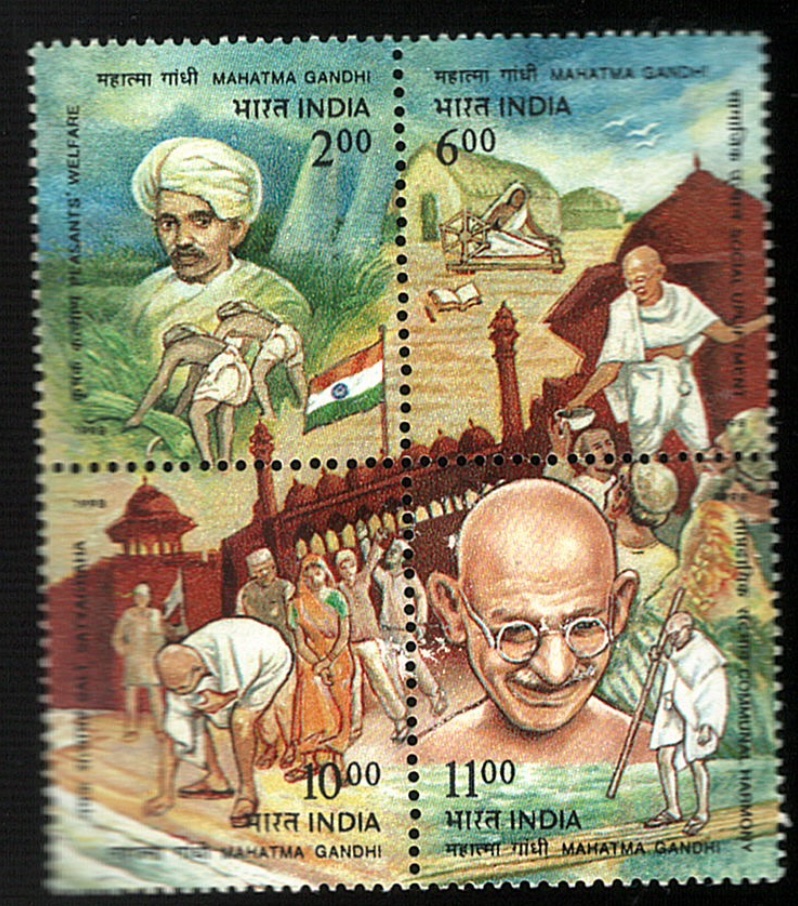
Salt meanwhile had become an emotive issue in India. An essential ingredient in food and diet, British saw it as a source of revenue. In 1878 British adopted a uniform salt tax policy, to control its production, sale, and hence its taxation. A central salt-commissioner and a salt-department was so created. By 1930, Mahatma Gandhi launched Salt-march, this commodity was responsible for about 3% of all tax revenue. Tax itself was higher than the production value.
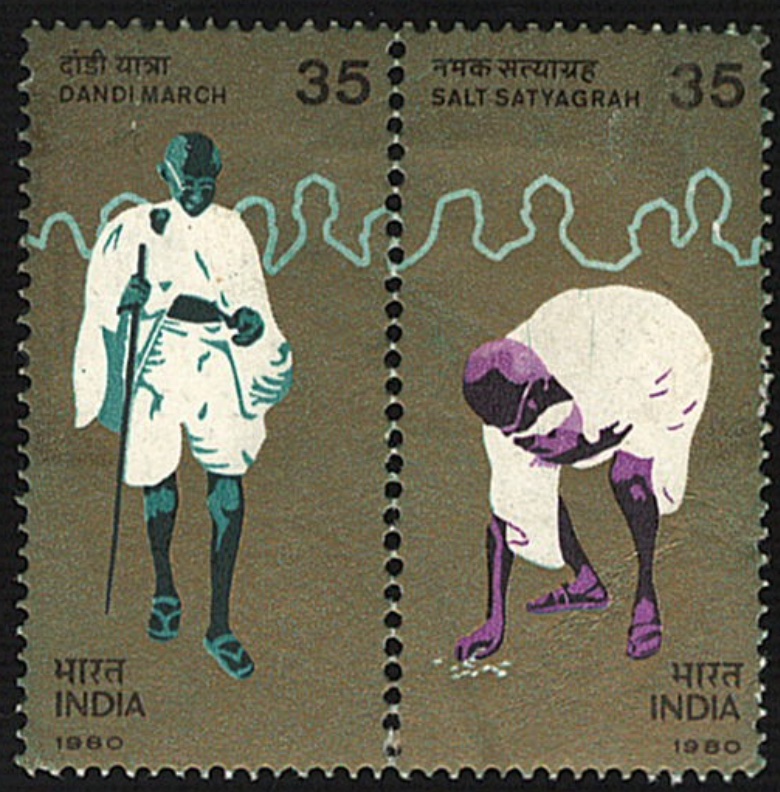
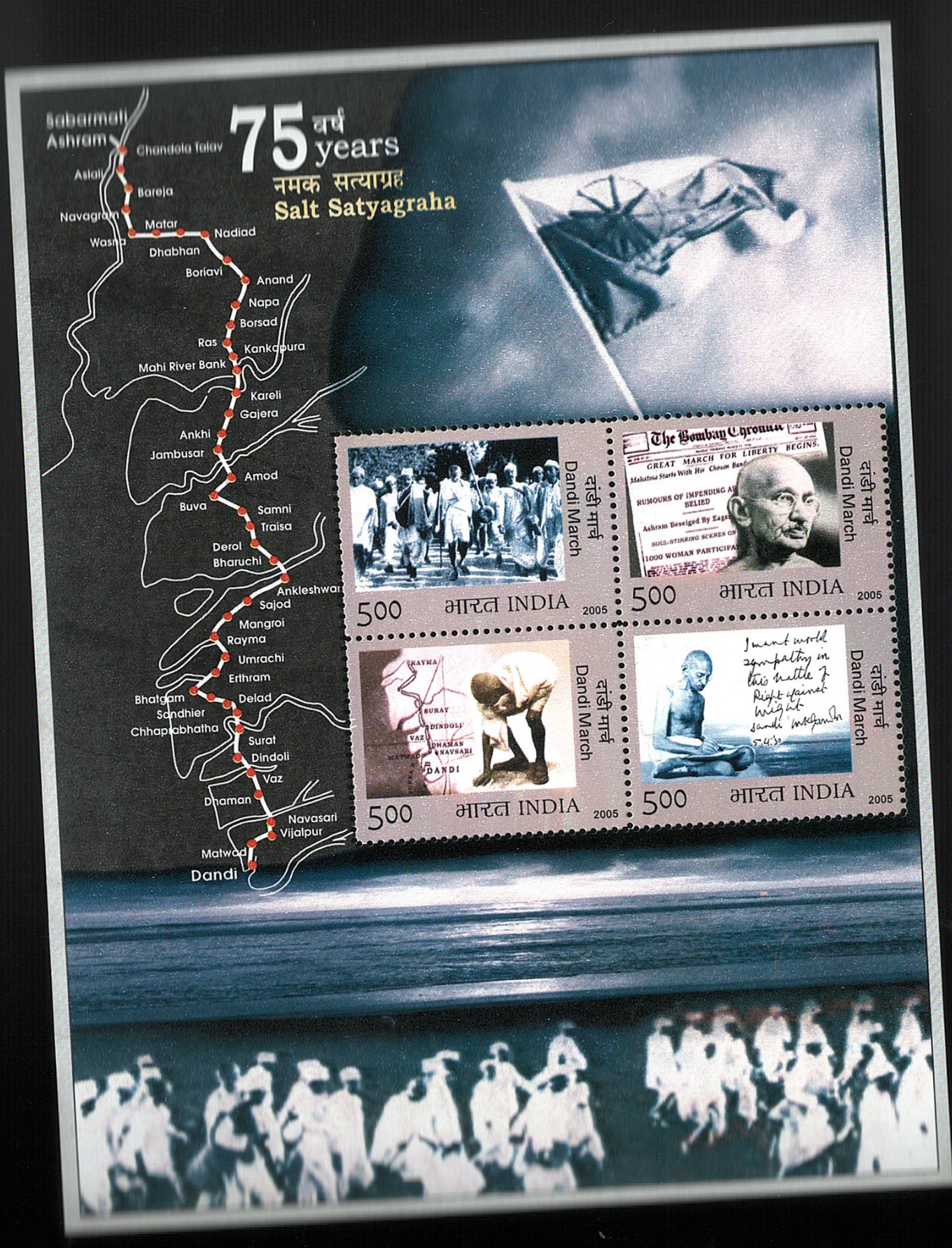
Salt-march was a defining moment in India’s freedom struggle. After the salt-march, Mahatma Gandhi never returned to Sabarmati. Due to civil disobedience, freedom struggle became more intensified. Salt taxes were abolished in April 1947, just before India was to attain its independence.
Universal Salt Iodization in India
Indian experiment with Iodine fortification of salt, started in Kangra Valley in Himachal Pradesh in 1950s. In 1962, we established “National Goiter Control Program” and began large-scale iodized-salt production. This was limited to government sector alone. Two decades later, in 1983 government gave up its sole monopoly over iodised salt, and established a goal to have a Universal Salt Iodization (USI) by the year 1996. In 1992, the Goiter Control Program was renamed as National Iodine Deficiency Disorders Control Programme (NIDDCP).
Smiling Sun logo
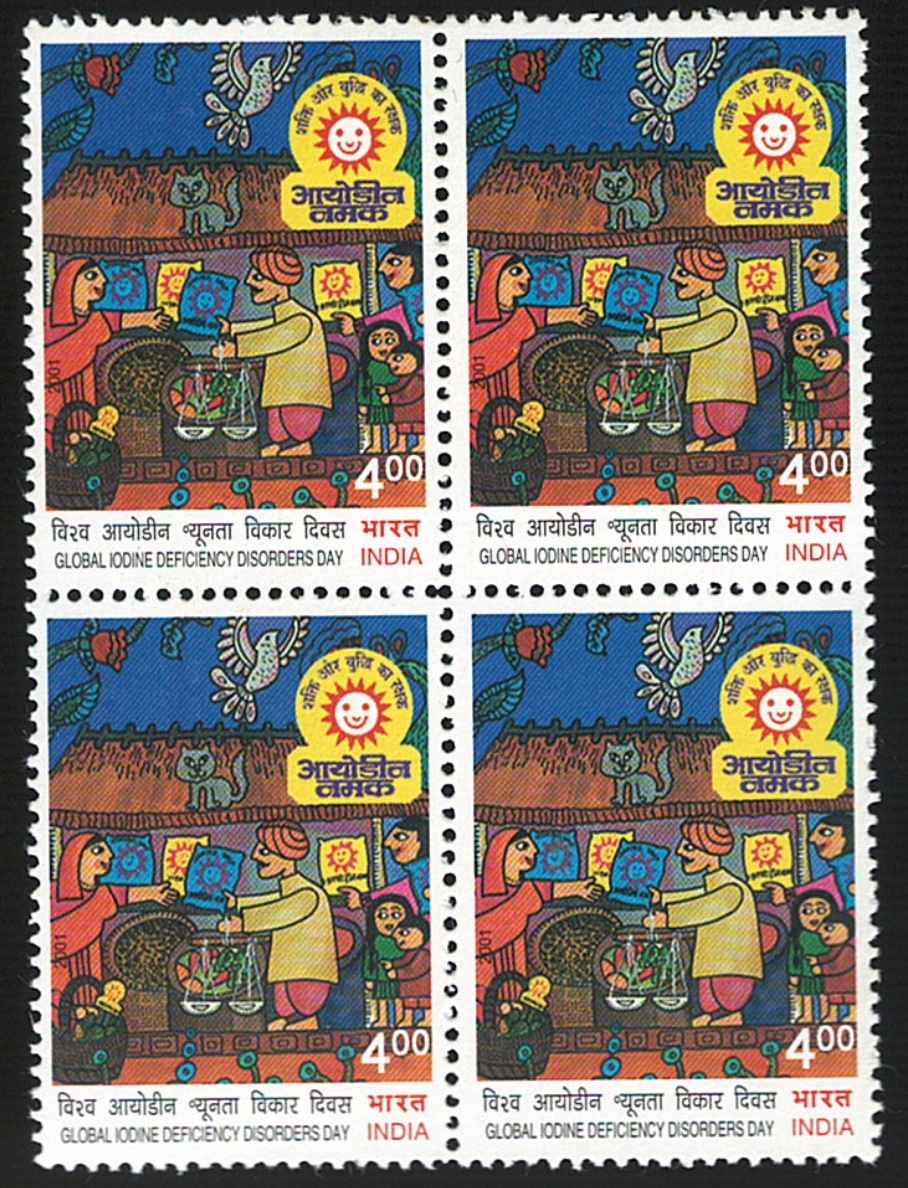
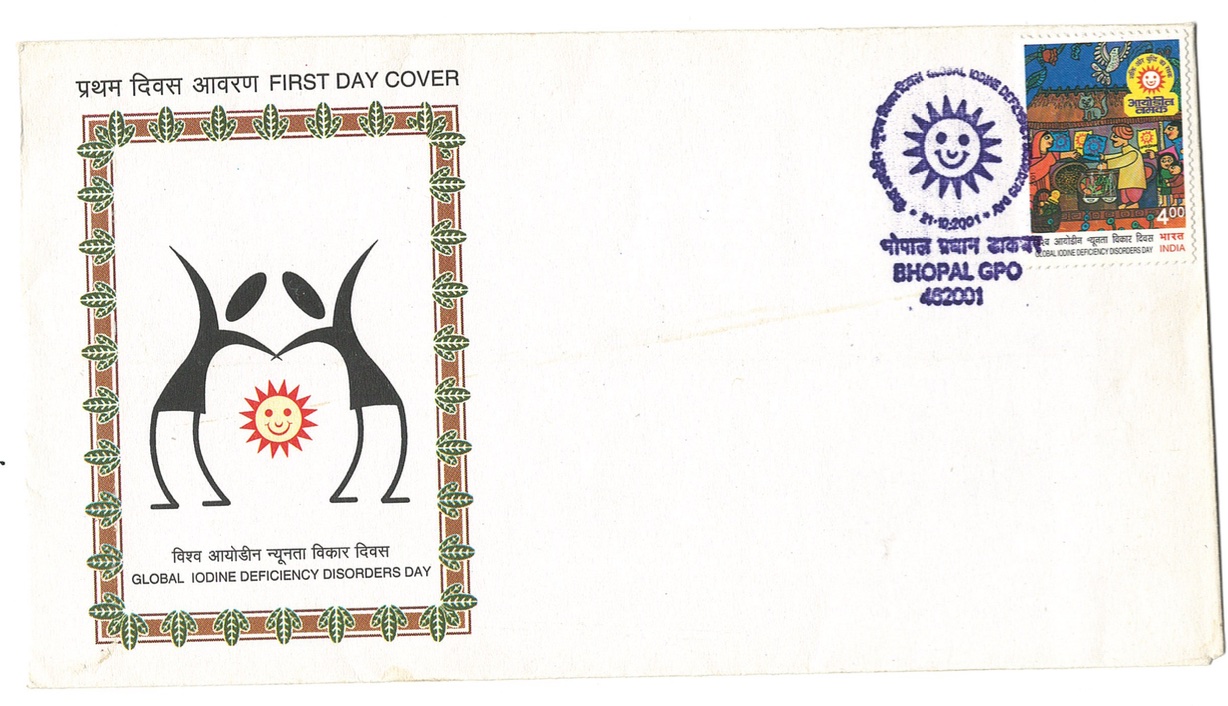
In 1996, NIDDCP launched a “smiling-sun” logo. This logo was to be placed on every pack of iodized salt that was to be sold. This logo is also proudly placed on the 2001 postage stamp.
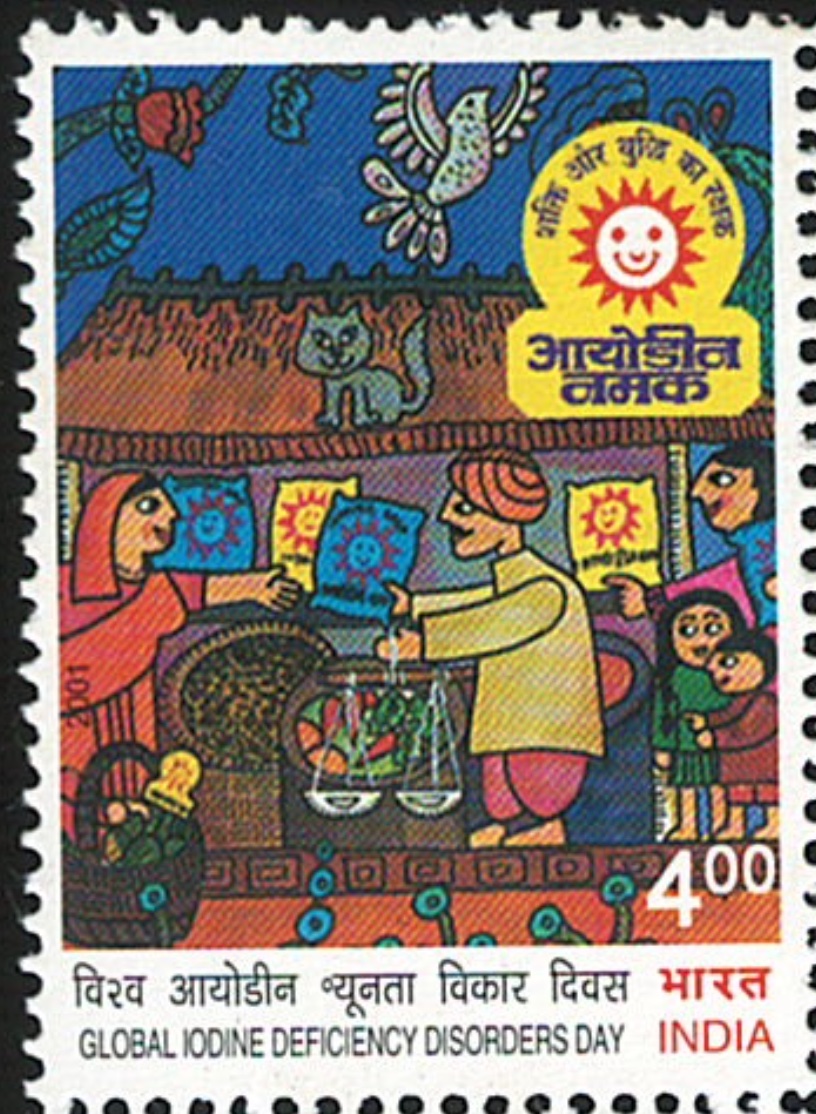
Today, almost all the salt in India in Iodized. Despite smiling-sun logo is now sparingly seen, non-iodized salt is more of an exotic fad. Salt is an effective vehicle for distributing iodine to the public because it does not spoil its taste. Iron and Zinc seem to be following the salt-fortification trend today. Adequately iodized salt contains 15 ppm of iodine, and today Salt commisioner’s and NIDDCP mandate is to ensure that it happens. Still, surveys indicate that about 9% of households in India are still not using Iodized salt.
It is speculated that as Iodine is fore-bearer of intelligence, speed and agility it has far reaching consequences. Iodine-replete India may advance further in global dominance. It may be a rhetoric, or possibly a reality ?
Great
Very truly expressed.