
The Beginning
It was 23rd February 1905, when four people met in an office room in Chicago. These were Paul P. Harris, a lawyer and three other businessmen—Gustavus Loehr, Silvester Schiele, and Hiram Shorey. With a mission to do something for greater good, they started an exchange of ideas. They formed a club (Rotary) that is still growing well.

The name and logo
They had rotating meetings among members’ offices – Hence the name Rotary. When Rotary was founded in Chicago by Paul P. Harris, the earliest emblem was a simple wagon wheel. It was designed by one of the early members, Montague Bear, an engraver. The wheel symbolized civilization, movement, and progress. The idea reflected Rotary’s belief in community development and forward motion.

By 1923, the design of rotary logo was standardized. Now it had a 24-tooth gear wheel, with Six spokes and A keyway (small notch) added to show action.


Initial years
First expansion of Rotary idea, was in 1908 in San Francisco, and soon after in other US cities: Oakland, Seattle, and Los Angeles. By 1910, there were 16 clubs in different US cities, which united to form the National Association of Rotary Clubs of America. This gave the movement a formal structure, leadership, and a constitution.

Rotary had expanded to other cities in the United States, and in 1912 it became the International Association of Rotary Clubs. As it got engaged in sanitation and community improvement work, it adopted its motto “Service Above Self.”


During World War I (1914–1918), Rotary clubs around the world shifted much of their focus toward war relief and humanitarian service. This laid the groundwork for its later strong focus on peace-building and international understanding. In 1922, the organization officially adopted the name Rotary International.
Paul Harris and his legacy
Having born and raised in rural Vermont in US in 1868, Paul Harris became a young city-lawyer in Chicago. There, he found the big city exciting—but impersonal and isolating. He made friends, who had a common belief that business success carried social responsibility.


With a conviction that ordinary professionals could do extraordinary good together. Until his death in 1947, Harris remained Rotary’s honorary president and a symbol of its humanitarian spirit. The

Dictatorships, Rotary and United Nations
Adolf Hitler came to power in Germany in 1933. Members of the Rotary clubs were rich, about a fifth of them were Jews, and had ties with US. The clubs were pressured to remove Jewish members and align with Nazi policies – which most of them did. Their attempted to survive, later drew criticism. By 1937, various authoritarian governments in Germany, Italy, Japan and Spain dissolved all the clubs.

After 1945, Rotary re-established clubs in formerly banned countries and renewed its emphasis on peace and international understanding. In April–June 1945, delegates from 50 nations met in San Francisco to draft UN Charter. Of the delegates 49 were Rotarians. Its involvement in the founding of the United Nations reflected a renewed commitment to preventing future global conflict.

Engagements in four decades after second world war
Between 1955 and 1980, Rotary evolved from a primarily fellowship-based service club into a highly organized global humanitarian force. It increased funding for community service and various international projects.


The range of activities portrayed in the postage stamps in the 75th anniversary issues include sanitation, education, aid distribution, air-ambulances, international cooperation, disability reduction, scholarships for young, and hunger alleviation.

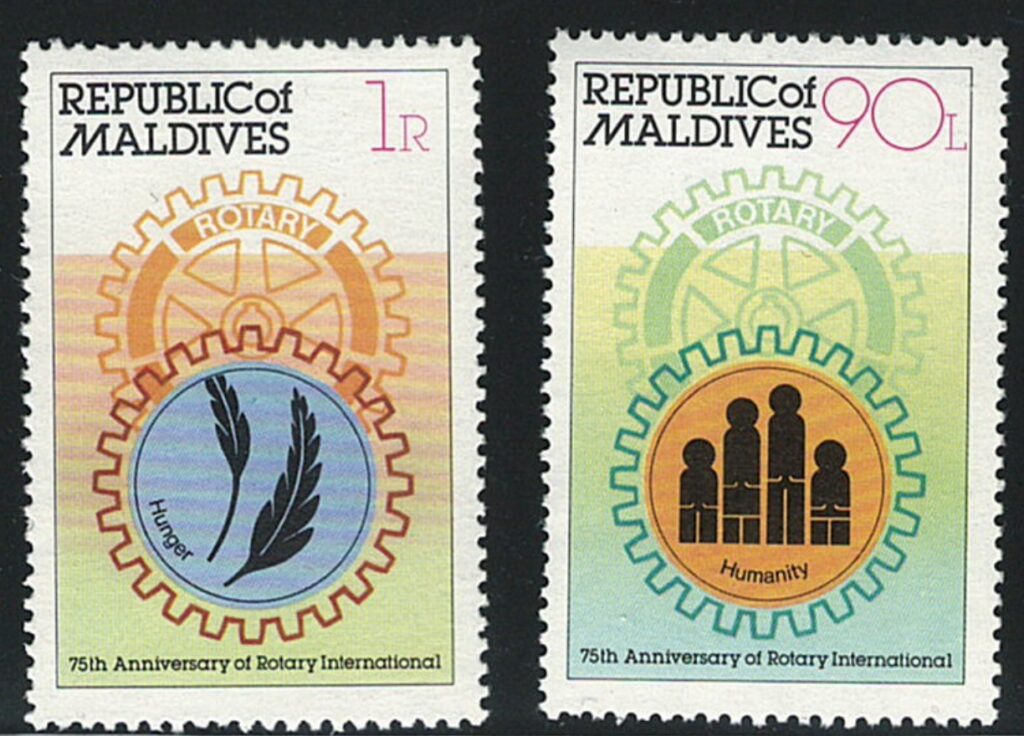
Key programs included Ambassadorial Scholarships that begun in 1947, Youth and Community Service Clubs and (or Rotract in 1960s), and 3-H Grants (Health, Hunger and Humanity) program launched in 1978. Many of these were foundation grants.

Arch Klumph had joined the Rotary Club of Cleveland in 1911, and proposed creation of a foundation. Rotary foundation was established in 1928, and by 1980 had identified six focus areas of work: (i) Peace and conflict resolution; (ii) Disease prevention and treatment; (iii)Water, sanitation, and hygiene; (iv) Maternal and child health; (v) Basic education and literacy; (vi) Economic and community development.


Rotary and Polio eradication: A giant leap
Rotary’s involvement in polio eradication began in 1979, when it launched its first polio immunization project in the Philippines, vaccinating millions of children. Recognizing the potential to eliminate the disease worldwide, Rotary started the PolioPlus program in 1985 — the first large-scale, internationally coordinated effort by a private organization to eradicate a disease.
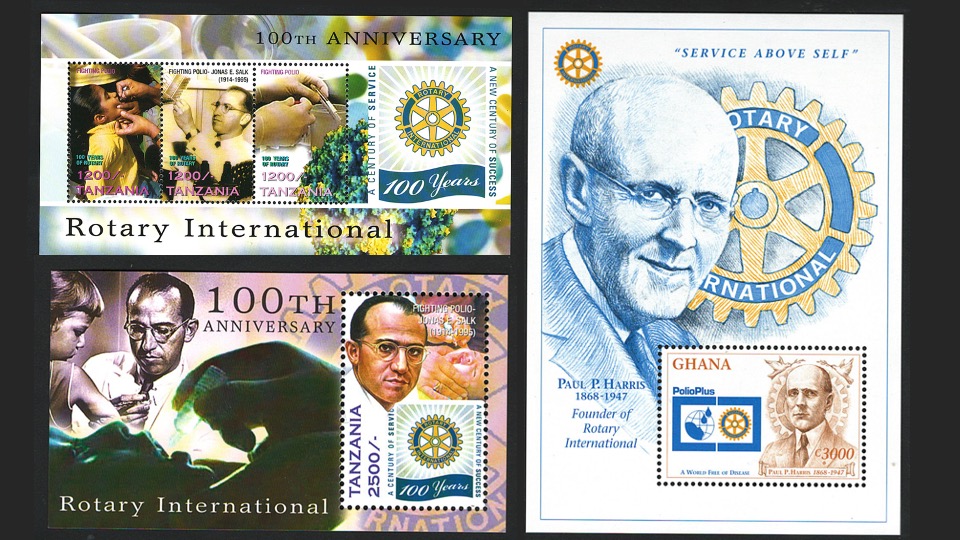
In 1988, Rotary became a spearheading partner in the Global Polio Eradication Initiative, alongside the World Health Organization, UNICEF, U.S. Centers for Disease Control and Prevention, and later the Bill & Melinda Gates Foundation.
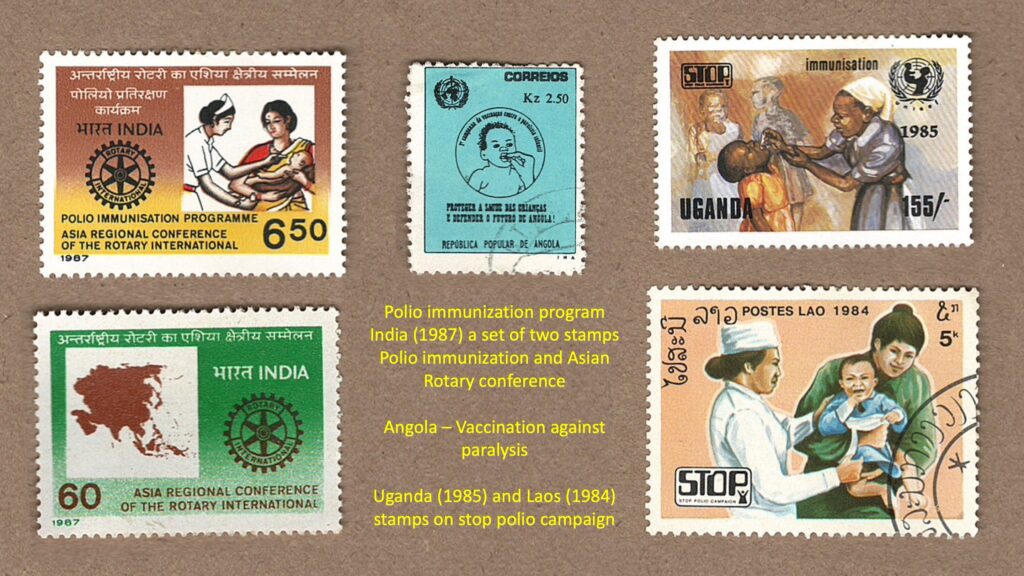
Rotary raised over $2 billion for polio eradication efforts, mobilized Millions of Rotary members volunteer in immunization drives, awareness campaigns, and surveillance activities. Rotary leaders advocate with governments worldwide to maintain political and financial commitment in more than 100 countries.


In 1988, polio paralyzed about 350,000 children per year in 125+ countries. Since then global polio cases have decreased by over 99%, and it is endemic in only two countries of the world. Polio plus program saved 1.5 million lives, and another 20 million people from polio-paralysis.

Polio-Plus proved that Public-private partnerships can eliminate disease and disease eradication through global collaboration is achievable.


Rotary in postage stamps
Rotary-inspired philately reflects the deep connection between the global service mission of Rotary International and the world of postage stamps. Many of these are on health-care delivery support.


Rotary philately is huge and inspiring. These stamps feature the Rotary wheel emblem, themes of service above self, and messages promoting peace, health, and international understanding.


Chess initiatives supported by Rotary often align with global educational and peace-building efforts. The game itself is governed internationally by FIDE, which promotes chess as a tool for cultural exchange and intellectual growth. Rotary clubs frequently collaborate with schools and community centers to introduce chess as a low-cost, high-impact educational activity.

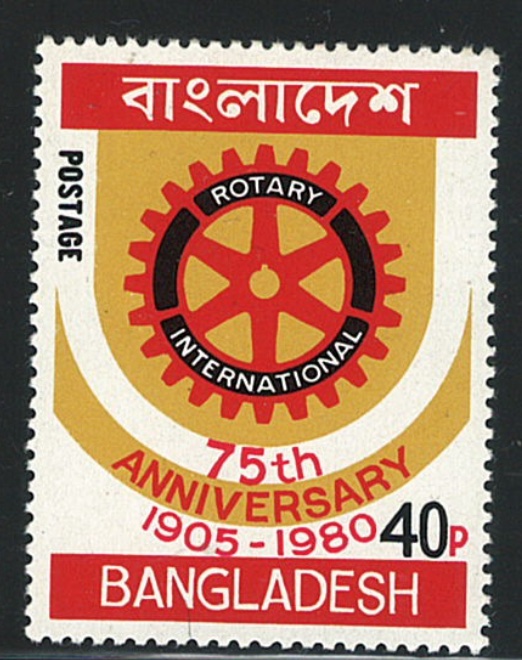
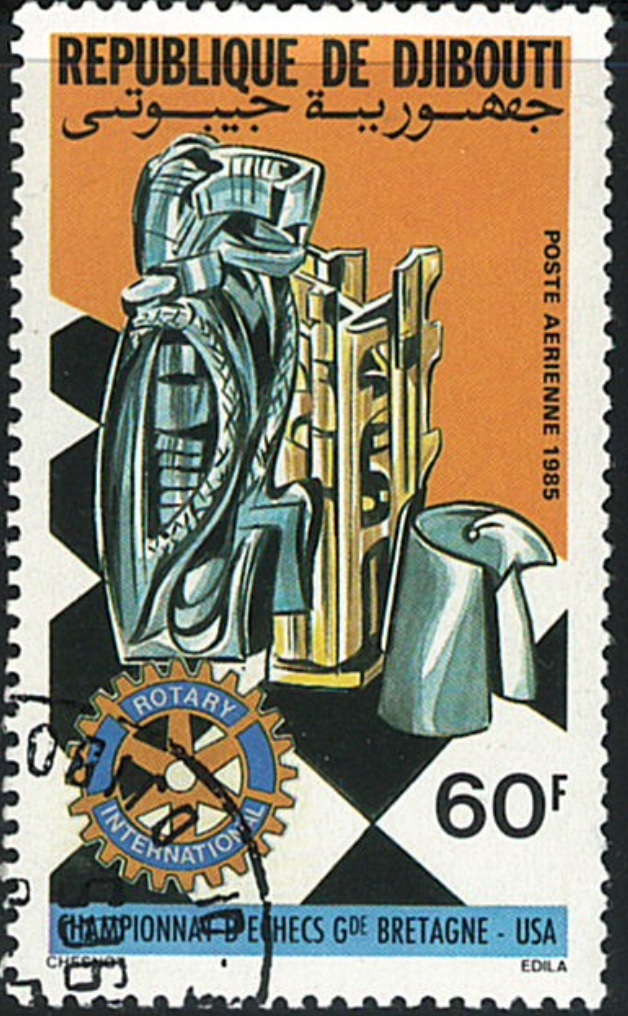

Philatelists value such issues not only for their design but also for their symbolic representation of global cooperation and volunteerism.


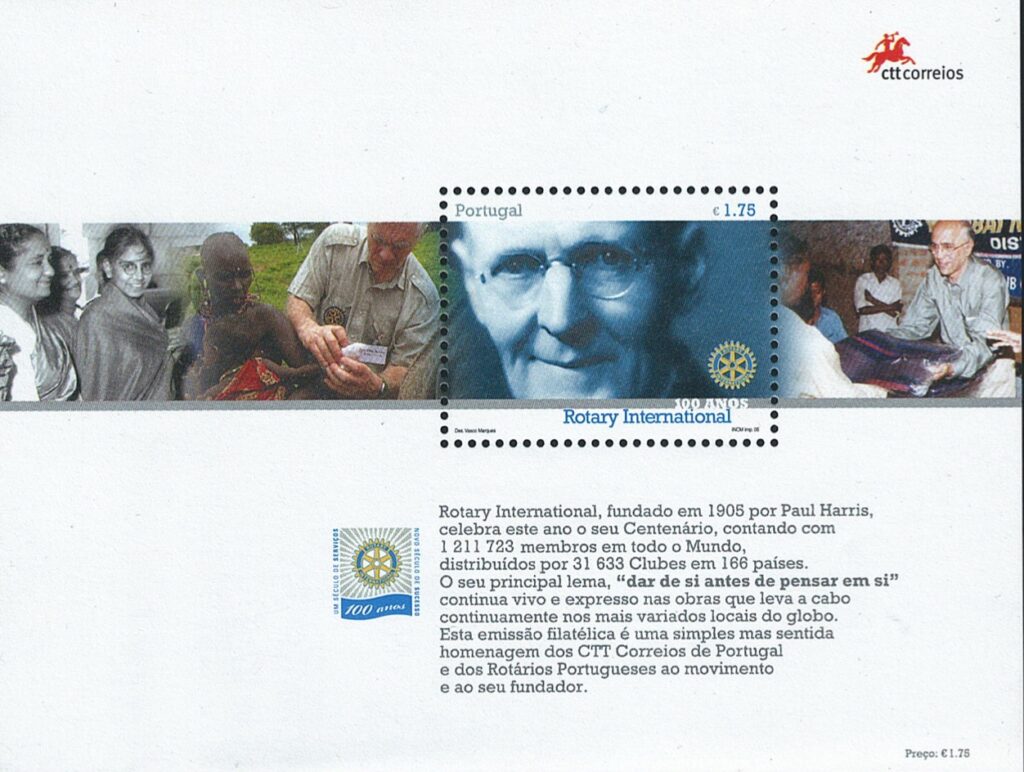


India special postal covers from Rotary clubs
A Special Postal Cover (also called a commemorative cover) is an envelope issued to mark an important event, anniversary, personality, or institution. Many organizations, including Rotary International, release special postal covers during milestone events such as anniversaries, conferences, humanitarian campaigns, or major projects.


Rotary International remains one of the world’s largest service organisations, with about 1.4 million members spread across more than 45,000 clubs in over 200 countries and regions. Clubs operate locally and globally, undertaking projects tailored to community needs. Rotary continues to charter new clubs, expand membership, and support Rotaract and Interact youth programs, aiming to nurture future volunteers and leaders.